
For business leaders at growing businesses, the toughest part of expansion often shows up in the background: IT infrastructure scalability. Systems that felt “good enough” at 10 employees can buckle at 50, turning everyday work into a chain of technology challenges like slow access, inconsistent tools, and support requests that never seem to end. The tension is simple, growth demands speed and reliability, but patchwork fixes make everything harder to manage. Scalable IT systems keep operations steady as the business adds people, locations, and customers.
Quick Summary: Scaling Your IT Infrastructure
- Plan scalable IT infrastructure around business growth, not just today’s needs.
- Use cloud integration to expand capacity and services without major rebuilds.
- Apply cybersecurity best practices to protect systems as complexity and access increase.
- Design network architecture for reliability, performance, and easy expansion.
- Prioritize future-proof technology planning to reduce rework and support long-term change.
Use Edge Computing to Cut Latency and Keep Sites Running
Once you’ve mapped the big moves for scalable IT, the next win is making performance and uptime less dependent on a single connection back to the cloud or data center. Edge computing does this by moving processing and analysis closer to where data is created, on the factory floor, in a retail location, or alongside remote equipment, so systems can respond faster with less latency. It also boosts resiliency: if connectivity hiccups, local workloads can keep running instead of stalling while they wait for round trips to a central site.
In practice, that scalability often comes from deploying modular edge hardware you can add site by site. For example, the Helix 500 Series is a fanless industrial edge computer for demanding environments. Powered by Intel 10th Gen Core processors and built with a solid-state design, it provides high I/O density and flexible expansion options suited to edge computing workloads. Its rugged construction and passive cooling make it a strong fit for dusty, vibration-prone locations and continuous operation, situations where fans can be a failure point. If you want the specifics on ports, expansion, and configurations, you can get the breakdown.
Build a Scalable IT Foundation Step by Step
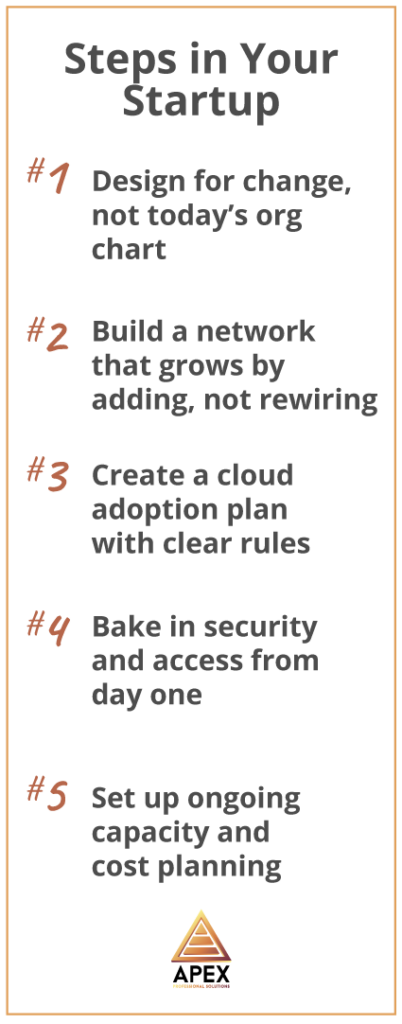 This process helps you upgrade IT in a logical order so growth feels like adding capacity, not rebuilding from scratch. It matters because even non-technical teams feel the pain of slow systems, outages, and surprise bills when infrastructure cannot keep up.
- Design for change, not today’s org chart
Start by listing the business capabilities you need (sales, support, operations, reporting) and the parts that deliver them (apps, data, devices, integrations). Choose modular building blocks you can swap or expand, like separating identity, storage, and core apps instead of bundling everything into one big system. This keeps future changes smaller and cheaper. - Build a network that grows by adding, not rewiring
Choose a simple, repeatable network pattern for each site and remote team, then standardize it with templates for Wi-Fi, segmentation, and VPN access. Add redundancy where downtime hurts most, such as two internet paths for key locations or automatic failover for critical links. This keeps performance steady as you add users, devices, and edge locations. - Create a cloud adoption plan with clear rules
Decide what belongs in cloud first (email, collaboration, backups, customer-facing apps) and what should stay local (ultra-low latency workloads, specialized equipment). A good reality check is that worldwide end-user spending keeps climbing, so planning for cloud use is often more practical than avoiding it. Set simple rules for data location, access, and costs before migrating anything. - Bake in security and access from day one
Standardize identity and permissions so people get only what they need, and remove access quickly when roles change. Build habits that scale by running employee security training and keeping it consistent for new hires, contractors, and vendors. This reduces the odds that growth increases risk. - Set up ongoing capacity and cost planning
Pick a few metrics you will review monthly, such as uptime, latency, storage growth, cloud spend, and help desk volume. Create a short roadmap that ties upgrades to business triggers like headcount, new locations, or product launches. This turns scaling into a routine decision instead of an emergency.
Scaling IT Infrastructure: Common Questions Answered
Q: What counts as “IT infrastructure” when we plan for growth?
A: It is broader than servers and Wi-Fi. The five components of IT infrastructure include hardware, software, network, data and storage, plus people and process. Writing plans for all five prevents surprise bottlenecks.
Q: How do we scale without creating new security risks?
A: Standardize identity, require MFA, and use least-privilege access so permissions do not sprawl as headcount grows. Add device management and a simple patching routine, then review access monthly for role changes.
Q: Why do costs jump during scaling, and how do we control them?
A: Costs spike when teams add tools without shared rules, or when cloud usage is not tagged and budgeted. Set budgets by department, turn on alerts, and retire duplicate apps quarterly.
Q: When should we run an audit before expanding?
A: Do it before a major migration, new location, or big hiring push. An IT infrastructure audit surfaces security gaps, waste, and resilience issues while fixes are still small.
Q: How can we integrate new systems without breaking what already works?
A: Pick one integration method first, usually APIs or a single iPaaS tool, and document data owners and “source of truth.” Pilot with one workflow, then scale the pattern.
Build the Skills to Make Better Infrastructure Decisions
Once you’ve worked through the common scaling questions, the next advantage is knowing enough to judge the answers for yourself. Investing in your own IT education can raise your confidence, and your accuracy, when choosing technology that needs to grow with the business. Foundational knowledge in cloud computing, networking, and security helps you understand what you’re buying, what tradeoffs you’re accepting, and what risks you’re inheriting as you add users, apps, and data. That makes it easier to have productive conversations with vendors or an internal team and avoid decisions that don’t scale.
Accessible online options can make this learning realistic alongside a busy schedule, including pathways to earn your IT degree remotely. With stronger fundamentals in place, you’ll be better prepared to choose the right scaling pattern, cloud, hybrid, edge, and security-by-design, based on what your business actually needs.
Keep Your Business—and Yourself—Running Strong
 As your business grows, keeping your IT infrastructure healthy is essential—but so is maintaining the health and energy of the people behind it. Long hours, demanding projects, and constant decision-making can take a toll, making regular exercise, good nutrition, recovery, and sustainable routines important parts of staying productive over the long term. For business owners and professionals looking to make wellness a priority, Weights & Shakes is a useful resource to explore. The company offers personalized fitness training, nutritional guidance, meal planning, supplements, and coaching, with an emphasis on developing sustainable health habits rather than pursuing quick fixes.
A business is only as resilient as the people who keep it moving. Investing in scalable technology can prepare your company for its next stage of growth; investing in your health can help ensure you’re ready to grow with it.
Understanding “When to Use What” for Scalability
Scalability patterns are repeatable setups that help systems handle more users, apps, and data without chaos. The key is turning options like cloud computing models, hybrid IT environments, edge computing integration, and security by design into simple stage-based guidance, so you choose what fits your growth moment before you spend.
This matters because the wrong pattern can lock you into costs, complexity, and risky shortcuts that get harder to unwind later. Clear rules of thumb also stop overbuilding early and underprotecting later, when sensitive data and uptime expectations increase.
Think of a retailer adding locations. They might start with cloud services for speed, keep a few systems on site for compliance, and add edge processing for fast in-store experiences as the mobile edge computing market is expected to reach $2.44 billion. Security is planned upfront, not bolted on after a breach.
Turning Scalable Infrastructure Choices Into Steady Business Growth
Fast growth can push systems to their limits, and the pressure is choosing upgrades that won’t box the business in later. The steadier path is a stage-aware approach, matching cloud, hybrid, edge, and security-by-design choices to real demand, guided by IT infrastructure best practices and long-term IT planning. Done well, technology scalability becomes business growth enablement: fewer fire drills, smoother launches, and clearer sustainable growth strategies as needs change. Build for change, not for a single forecast. Start with a quick assessment of today’s workloads and run a small pilot for the next growth-stage pattern. That discipline protects stability and resilience while keeping performance and growth moving forward.